19 June, 2026
Ask any teacher what they spend a significant portion of their time doing outside the classroom, and written feedback will almost certainly be near the top of the list. Marking books, writing comments, and noting next steps, these are among the most time-intensive aspects of teaching. And yet, for something so central to a teacher’s professional life, the question of what makes written feedback truly effective is one that educators and researchers have been exploring for decades.
The research is compelling. John Hattie, whose landmark synthesis of over 800 meta-analyses on student achievement ranked feedback among the highest-impact influences on learning, argued that it is not simply the act of giving feedback that matters; it is the quality and clarity of the feedback. Feedback, in his view, works best when it is specific, timely, and directed at closing the gap between where a student currently is and where they need to be.
Similarly, Dylan Wiliam and Paul Black’s influential work on formative assessment established that written feedback, when used well, is not about evaluation; it is about advancing learning. Their research found that comments focused on improvement were significantly more effective than grades or marks alone, and that combining a grade with a comment often led students to ignore the comment entirely.
Perhaps the most useful framework for thinking about written feedback comes from Hattie and Helen Timperley, who proposed that effective feedback answers three essential questions: Where am I going? meaning, what is the goal? How am I going? meaning, how does my current work measure up? And where to next? meaning, what do I need to do to improve?
These three questions sound deceptively simple, but they contain a profound shift in how we think about feedback. They move it away from judgment and towards dialogue. They position the student not as a passive recipient of a teacher’s verdict, but as an active participant in their own learning journey.
This is the vision of written feedback that our school has been working towards.
When our school identified written feedback as one of the key goals for our teaching and learning development, we began – as schools often do – with good intentions and a shared enthusiasm. What we discovered, however, was something both surprising and entirely understandable: different parts of our school held genuinely different understandings of what written feedback meant in practice.
This was not a failure. It was, in fact, one of the most important things we could have learned at the outset.
A teacher in one department understood written feedback as a structured end-of-task comment with clear targets. A colleague elsewhere saw it as an ongoing written dialogue within the student’s book – brief, responsive, conversational. In some classrooms, feedback was primarily summative, arriving at the end of a unit. In others, it was woven into the fabric of everyday learning.
Some teachers focused on what the student had done well; others were almost entirely focused on what came next. None of these approaches was wrong. But the absence of a common language meant we were, in effect, talking about different things while using the same words.
Before we could ask teachers to develop their practice, we needed to find common ground. We needed a shared starting point, not to make every classroom look the same, but to ensure that our conversations about feedback were genuinely about the same thing.

The conversations that followed were among the most valuable professional discussions our staff had engaged in for some time. When the teachers were simply asked, what does written feedback look like in your classroom, and what do you hope it does for your students? The range of answers was illuminating.
What emerged from those discussions was a set of shared principles that we could all agree on, regardless of subject, phase, or context. Written feedback, we agreed, should be purposeful. It should have a clear intention beyond simply recording that work has been seen. It should be accessible; students should be able to understand it and, crucially, do something with it. And it should be dialogic, even when it is not a literal written conversation; it should invite the student to think, respond, and act.
These principles became our common ground. They did not prescribe a single method or format. They did not tell a mathematics teacher that their feedback must look like an English teacher’s or ask an early years practitioner to adopt the language of secondary assessment.
What they did was give us a shared purpose, which made all the difference in the conversations that followed.
One of the most rewarding aspects of this work has been seeing how those shared principles translate into genuinely different practices across the school and recognising that this diversity is a strength, not an inconsistency.
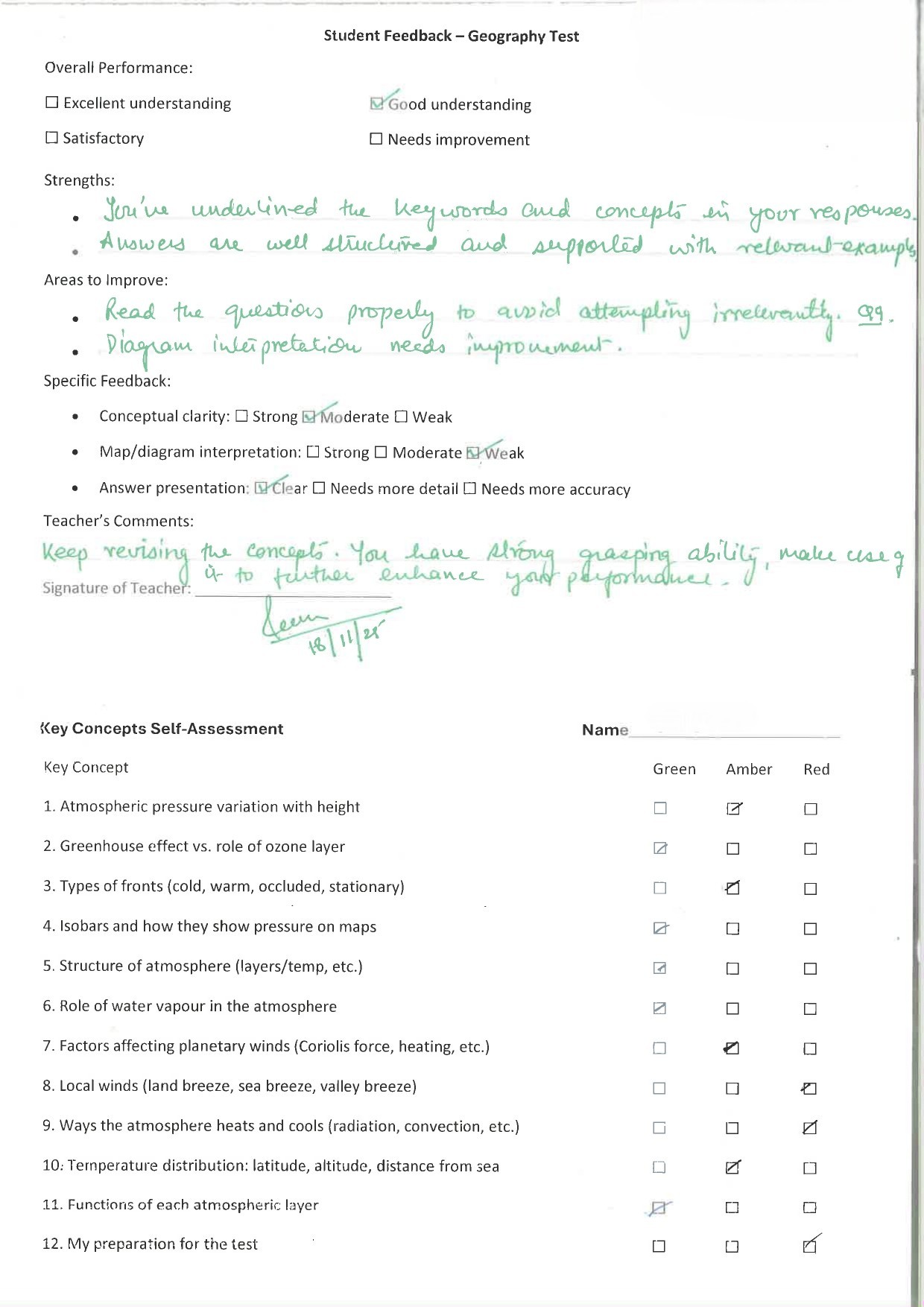
In subjects where extended writing is central, written feedback often takes the form of a structured comment that identifies what has been achieved, notes a specific area for development, and sets a clear and actionable next step. Students are given time to read, reflect, and respond, sometimes in writing, sometimes through a revision task. The feedback becomes part of the work itself, not something separate from it.
In more practical or technical subjects, written feedback may be briefer, more targeted, and closely tied to a specific skill or process. A short, precise comment directing a student’s attention to one aspect of their method can be more powerful than a lengthy paragraph, particularly when the student has the opportunity to act on it immediately.
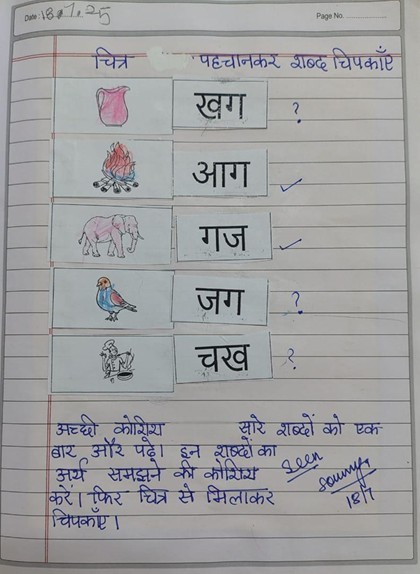
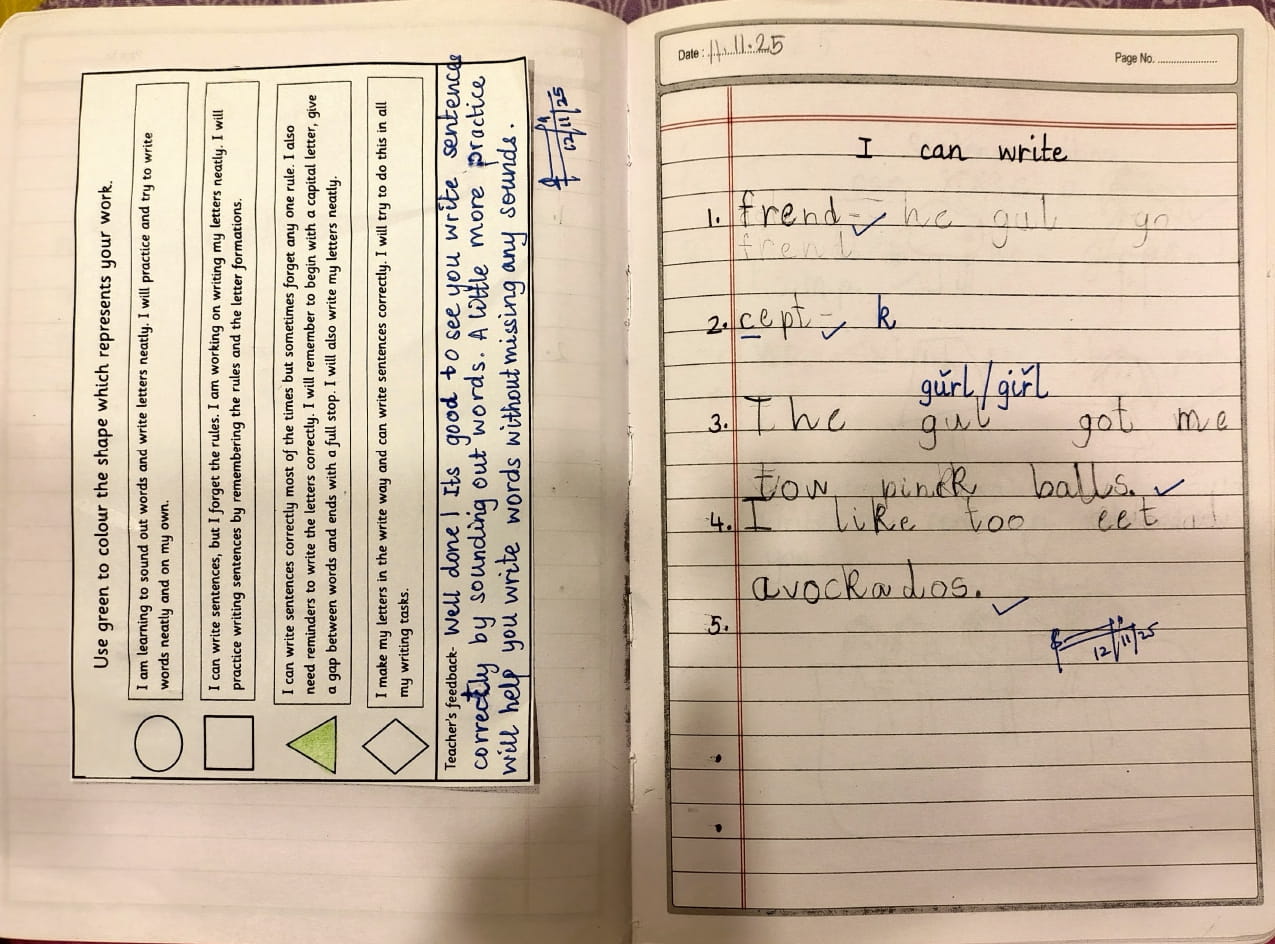
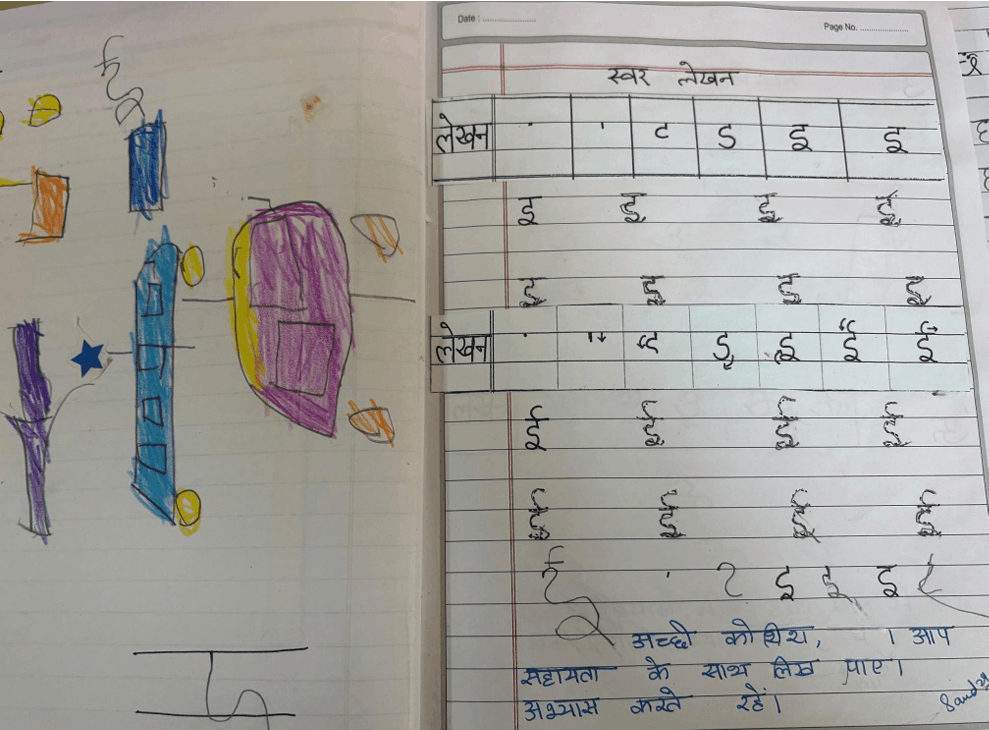
In our younger year groups, written feedback is often more conversational in tone, designed to encourage and to guide in equal measure. The language is carefully chosen so that students can access it independently, and, where possible, it prompts a response, a correction, a continuation, or a question answered.
What unites all of these approaches is the intention behind them: to move the student forward, to make them feel seen, and to give them something they can act on.
It is still early in our journey, and we are honest about that. But we are already beginning to see shifts that matter.
Students are engaging with feedback more deliberately. Where once a marked book might be glanced at and set aside, we are increasingly seeing students pause, re-read comments, and act on them. Sometimes independently, sometimes in conversation with their teacher. There is a growing sense, in many of our classrooms, that feedback is not the end of the process. It is a step within it.
Teachers, too, are reporting that the quality of their feedback conversations, both written and verbal, has deepened. When there is a shared understanding of what feedback is for, it becomes easier to write, receive, and use.
Perhaps most importantly, students are beginning to ask better questions about their own learning. Not just what mark did I get? But what do I need to do next? That shift in question is, in many ways, exactly what the research has long told us great feedback should produce.
This work is not finished, and it is not meant to be. Written feedback is not a policy to implement and move on from. It is a practice to develop, refine, and continuously reflect on. As a school, we remain committed to that process.
In the months ahead, we will continue to closely monitor how students respond to feedback across different subjects and year groups. We will keep asking the hard questions, not just whether we are giving feedback. But is it working? We will listen to our students, who are, after all, the most important judges of whether our efforts are landing.
We share this journey with you not because it is complete, but because we believe transparency about how we are thinking and working is part of what it means to be a learning community. Written feedback is, at its heart, a conversation. And that is exactly what we hope this article begins.
Written feedback in schools refers to comments, notes or next steps given by teachers to help students understand their learning more clearly. It is not simply about marking work, but about guiding students towards improvement.
Written feedback is important because it helps students know what they have done well, where they need to improve, and what they should do next. When feedback is clear and actionable, students are more likely to reflect on their work and move forward in their learning.
Effective written feedback is specific, timely, accessible and purposeful. It should help students understand the gap between where they are and where they need to be, while giving them clear next steps they can act on.
Marks or grades usually tell students how they have performed, while written feedback helps them understand how to improve. Written feedback shifts the focus from judgement to growth, reflection and learning.
Written feedback supports formative assessment by helping students improve while learning is still in progress. It allows teachers to guide students, and gives students the opportunity to respond, revise and strengthen their understanding.
Effective feedback should help students answer three important questions: Where am I going? How am I going? And where to next? These questions help students understand the goal, their current progress and the next step in their learning.
No. Written feedback may look different across subjects, age groups and learning contexts. In some subjects, it may be detailed and structured, while in others it may be brief, targeted and skill-specific. What matters is that it helps the student move forward.
Students can make better use of written feedback by reading it carefully, reflecting on it, asking questions and acting on the next steps suggested by the teacher. Feedback becomes meaningful when students use it to improve their work.
Schools can build a strong feedback culture by developing a shared understanding of what feedback is meant to achieve. When teachers and students see feedback as a conversation rather than a final judgement, it becomes a more powerful part of learning.
Effective written feedback can help students become more reflective, independent and confident learners. Over time, it encourages them to ask better questions about their own learning and take greater ownership of their progress.